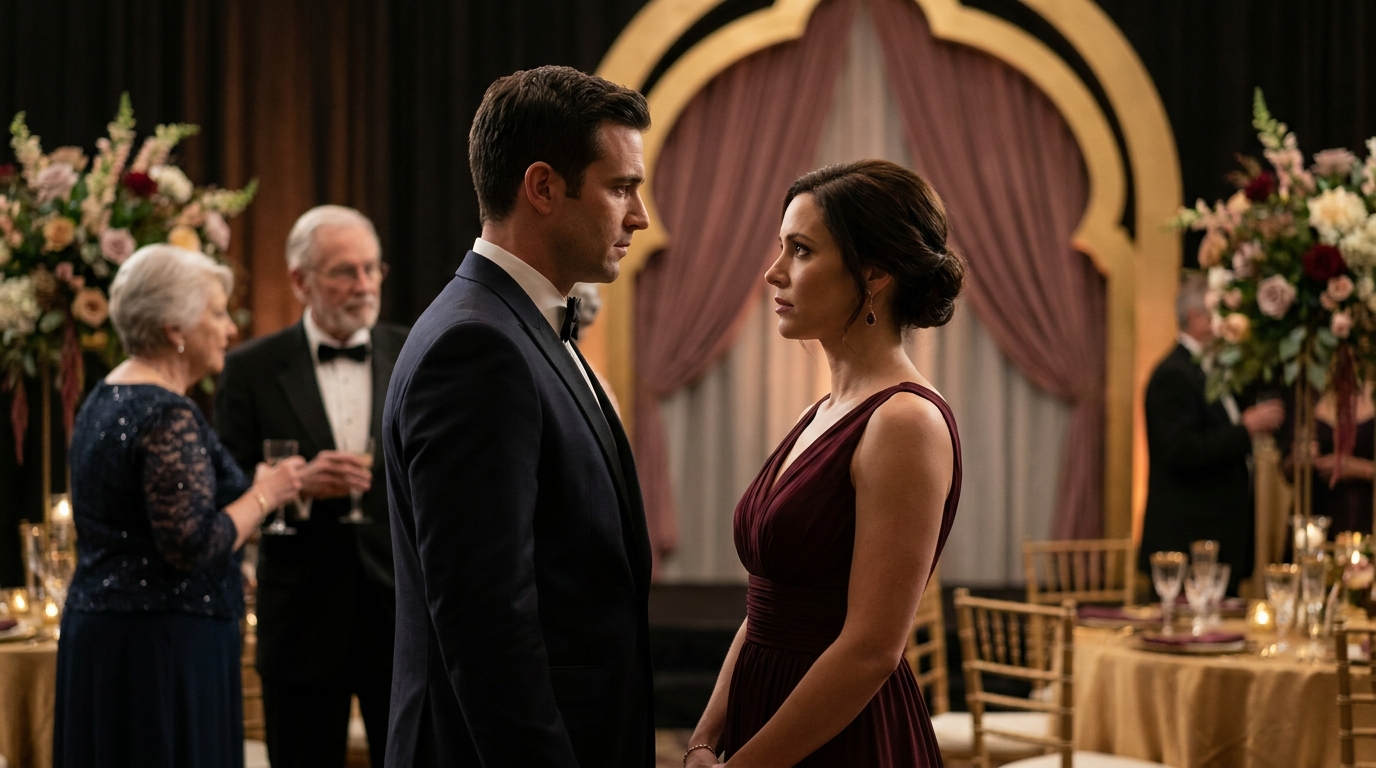
The arranged marriage romance begins with a future that seems to have been decided before the two leads have had time to understand each other. Families make introductions. Alliances are discussed. A ceremony appears on the calendar. Everyone around the couple already knows what the relationship is supposed to become.
The leads still have to decide what it means to them.
That gap between public expectation and private choice gives the trope its emotional charge. The marriage may be carefully planned, but affection cannot be scheduled. Trust has to grow through conversation, boundaries, vulnerability, and the small moments when one person protects the other's freedom instead of merely protecting the arrangement.
For short drama, the setup is especially powerful. The external stakes arrive immediately: a family announcement, a formal introduction, an engagement contract, a rival household, or a wedding neither lead expected to face so soon. The emotional story then unfolds one decision at a time.
The best versions are not about two people learning to obey a plan. They are about two adults turning an inherited plan into a partnership they actively choose.
What Is the Arranged Marriage Romance Trope?
An arranged marriage romance is a love story in which relatives, matchmakers, community ties, business interests, political duties, or long-standing family expectations help bring two adult characters together as potential spouses. The arrangement creates the relationship's starting conditions, while the romance develops through the leads' own choices.
Most versions use five story beats:
- The proposal: The match is introduced as practical, expected, or strategically valuable.
- The negotiation: The leads establish boundaries, conditions, doubts, or reasons to continue.
- The public performance: They must appear united before their feelings have caught up.
- The private discovery: Everyday moments reveal who each person is without the audience of family or society.
- The chosen commitment: The leads decide whether they want the relationship after obligation is no longer enough.
The final beat matters most. If the characters never gain meaningful room to accept, refuse, renegotiate, or leave, the story loses the element that makes the romance satisfying: choice.
Arranged Marriage Is Not the Same as Forced Marriage
This distinction should be clear in both fiction and real life. In an arranged marriage between adults, families may play a leading role in the introduction or planning, but the prospective spouses retain the choice to proceed. In a forced marriage, one or both people do not freely consent and coercion is involved. Official guidance from the UK government explains that an arranged marriage can become a forced marriage if coercion enters the process.
Romantic fiction does not become more intense by blurring that line. It becomes stronger when the story makes the leads' agency visible.
That does not mean every choice must be easy. A character may fear disappointing a parent, losing status, weakening a family alliance, or walking away from a future that offers security. Those pressures can create serious drama. The romance earns its payoff when the story recognizes the pressure and allows the character's decision to matter.
Why Arranged Marriage Romance Hooks So Fast
The relationship begins with consequences
Many love stories spend time asking whether two people will enter a relationship. Here, the outside world behaves as if the relationship already exists.
A single announcement can change where the leads live, how their families treat them, who becomes a rival, what secrets must be disclosed, and what future everyone expects. That makes the first episode feel consequential before the couple has shared an honest conversation.
The setup resembles the marriage of convenience trope, but the pressure often comes from a wider circle. The couple are not only managing a private bargain. They are navigating family history, public reputation, and other people's hopes.
Strangers must learn intimacy in reverse
The trope often reverses the usual romantic order. Commitment comes first. Familiarity follows.
The leads may know each other's surname, family reputation, education, or official biography while knowing nothing about the person behind those facts. They can stand together for engagement photos and still be uncertain how the other takes their coffee, handles anger, or responds when nobody is watching.
That creates a reliable stream of small reveals. A formal partner becomes funny in private. A supposedly cold heir quietly cares for a sibling. A dutiful daughter has an ambition nobody asked about. Each discovery challenges the simplified version of the person that families presented.
Public unity creates private tension
An arranged couple may need to appear compatible before they feel comfortable together. That gap produces scenes with two layers.
At dinner, they smile for relatives while arguing through whispered sentences. At a celebration, one lead performs affection to stop an intrusive question, then realizes the gesture felt unexpectedly real. During a family conflict, they must decide whether to defend each other publicly even though their private relationship is still uncertain.
This is why the trope pairs so naturally with fake dating. Both use performance to reveal real emotion. The difference is that an arranged marriage usually carries a longer history and a more permanent public promise.
Family expectations widen the emotional stakes
The romance is rarely isolated. Parents, grandparents, siblings, rivals, and family friends may all believe they understand what the match represents.
That wider network can add warmth as well as conflict. A perceptive grandparent may notice the couple's growing trust. A sibling may become an ally. Two families may discover that their carefully planned alliance is changing because the leads are finally speaking honestly.
When written well, the family is not a faceless obstacle. Different relatives want different things, and their expectations reveal the histories the leads are trying to honor, revise, or escape. That layered pressure can connect the trope to the secrets and inheritance battles found in family dramas.
Four Arranged Marriage Romance Structures That Work
1. The respectful strangers structure
Both leads agree to consider the match, but neither expects love. Their first challenge is not hostility. It is distance.
This structure works through curiosity. Each episode reveals another private habit, fear, responsibility, or kindness. The romance feels mature because the leads are not trying to defeat each other. They are learning whether affection can grow inside a decision that began practically.
2. The rival families structure
The marriage is intended to end a feud, unite competing businesses, protect a title, or stabilize a divided community. The leads inherit distrust before they have created any of their own.
Here, the romantic question becomes inseparable from loyalty. Can they build trust without betraying the people who raised them? Can they challenge family myths without pretending the old wounds never happened?
This version can borrow the sharp friction of an enemies to lovers drama, but the strongest conflict comes from competing histories rather than endless insults.
3. The hidden identity structure
One lead enters the arrangement with incomplete information. The quiet teacher is actually the family heir. The supposedly reckless socialite has been protecting the company. The convenient match is connected to a past event neither family has explained.
The reveal should do more than manufacture shock. It should force the couple to revisit what trust means. If love grew while one person was hiding a major truth, the story must allow anger, explanation, and repair. That is what gives hidden identity dramas their emotional payoff.
4. The reluctant allies structure
The leads do not want the arrangement, but they discover a shared problem: a manipulative relative, a rival claimant, a threatened family business, or a secret that could hurt them both.
They begin by cooperating strategically. Respect grows because each person proves useful, loyal, and honest under pressure. Attraction arrives after partnership, which lets the romance develop with the anticipation of a slow burn romance even when the plot moves quickly.
Arranged Marriage vs. Marriage of Convenience
These tropes overlap, but they are not identical.
In a marriage of convenience, the couple usually enters a practical agreement for a defined benefit: inheritance, legal protection, financial stability, reputation, or access to something neither can obtain alone. The deal is central.
In an arranged marriage romance, other people or inherited structures often shape the match. Family compatibility, tradition, diplomacy, succession, community ties, or long-standing promises may matter as much as the couple's immediate practical goals. The social network is central.
A story can use both. Two families may arrange a match that also gives each lead a clear benefit. The distinction helps explain where the pressure comes from:
- If the couple designed the terms, the story leans toward marriage of convenience.
- If family or community structures initiated the match, it leans toward arranged marriage.
- If one or both people cannot freely refuse, the story is dealing with coercion, not a consensual romantic arrangement.
What Makes the Romance Feel Earned?
Both leads need meaningful agency
Agreement should not appear once and then disappear. Strong stories let the characters keep making choices throughout the relationship.
They can question a condition, delay a ceremony, defend a career, ask for privacy, confront a relative, change a living arrangement, or decide what parts of tradition they want to keep. Agency becomes visible through decisions with consequences.
Respect should arrive before possession
An arranged match can create instant access to another person's life, but access is not intimacy. A ring, announcement, or shared home does not erase boundaries.
The most romantic scenes often show restraint: asking before entering a room, refusing to read a private message, stopping a humiliating family conversation, or giving the other person space to choose without punishment.
The couple needs a private language
Public performance may start the story, but private understanding makes the relationship unique.
Shared jokes, small rituals, coded glances, honest late-night conversations, and quiet acts of care show that the leads are building something their families did not arrange. The relationship becomes theirs because it contains knowledge no one else has.
The ending should include a fresh choice
A satisfying finale does more than complete the original plan. It gives the couple an opportunity to choose again with fuller information.
Perhaps the alliance is no longer necessary. Perhaps a secret has dissolved the old agreement. Perhaps the family withdraws its approval. When the practical or social pressure weakens, the leads finally have to answer the romantic question: Would we still choose each other now?
Common Failure Modes
Treating pressure as consent
If a character cannot realistically refuse, the story should not pretend that silence equals enthusiasm. It should name the pressure, take the consequences seriously, and create real space for choice.
Making one culture the villain
Family involvement can create tension without reducing relatives, traditions, or communities to a stereotype. Specific characters should have specific motives. Some may be controlling, some protective, some conflicted, and some unexpectedly supportive.
Confusing wealth with worth
Luxury can make the setup visually irresistible, especially in a billionaire CEO romance. It cannot substitute for character.
The powerful lead still needs to listen, apologize, and respect boundaries. The less powerful lead needs goals and leverage beyond being chosen.
Delaying honesty without changing anything
Secrets and misunderstandings should alter the relationship. If every reveal is postponed only to stretch the plot, the couple stops developing.
Good delay creates pressure. Great delay forces a decision.
Letting the family solve the romance
Approval can be meaningful, but the emotional climax belongs to the leads. The couple should not end together merely because a parent finally permits it. They should articulate what they want and what kind of partnership they intend to build.
A Five-Question Test for Arranged Marriage Romance
When you watch or read this trope, ask:
- Can both adults meaningfully accept, refuse, or renegotiate the match?
- Do the leads learn who the other person is beyond family reputation?
- Does public duty create private choices rather than erase them?
- Are cultural and family pressures written with specificity instead of stereotype?
- Would the couple choose each other if the original arrangement disappeared?
If the answer to all five is yes, the romance is probably doing more than decorating obligation with attractive chemistry. It is showing how trust can transform a plan made around two people into a life built by them.
Why the Trope Fits Short Drama
Arranged marriage romance naturally balances speed and emotional progression.
The premise can be established in one scene. The family has chosen a match. The engagement is imminent. The leads meet under pressure. From there, every short episode can deliver one meaningful shift: a boundary negotiated, a public defense, a private confession, a family secret, a jealous misunderstanding, or a moment when duty becomes care.
The format also makes visual contrast easy to read. Formal ceremonies can cut to awkward breakfasts. Perfect public photographs can hide tense conversations. Lavish family homes can contain two people trying to create one honest corner of privacy.
That contrast keeps the story moving while leaving room for tenderness. The wedding may be arranged. The intimacy still has to be discovered.
Explore Nuvelle for AI-crafted short dramas filled with family secrets, dangerous promises, unexpected alliances, and relationships that become real only when the characters choose them.